
Alright, let’s break this down. You’re seeing durags everywhere, from the courtside to the cover of Vogue, and you’re thinking, “What’s the deal?”
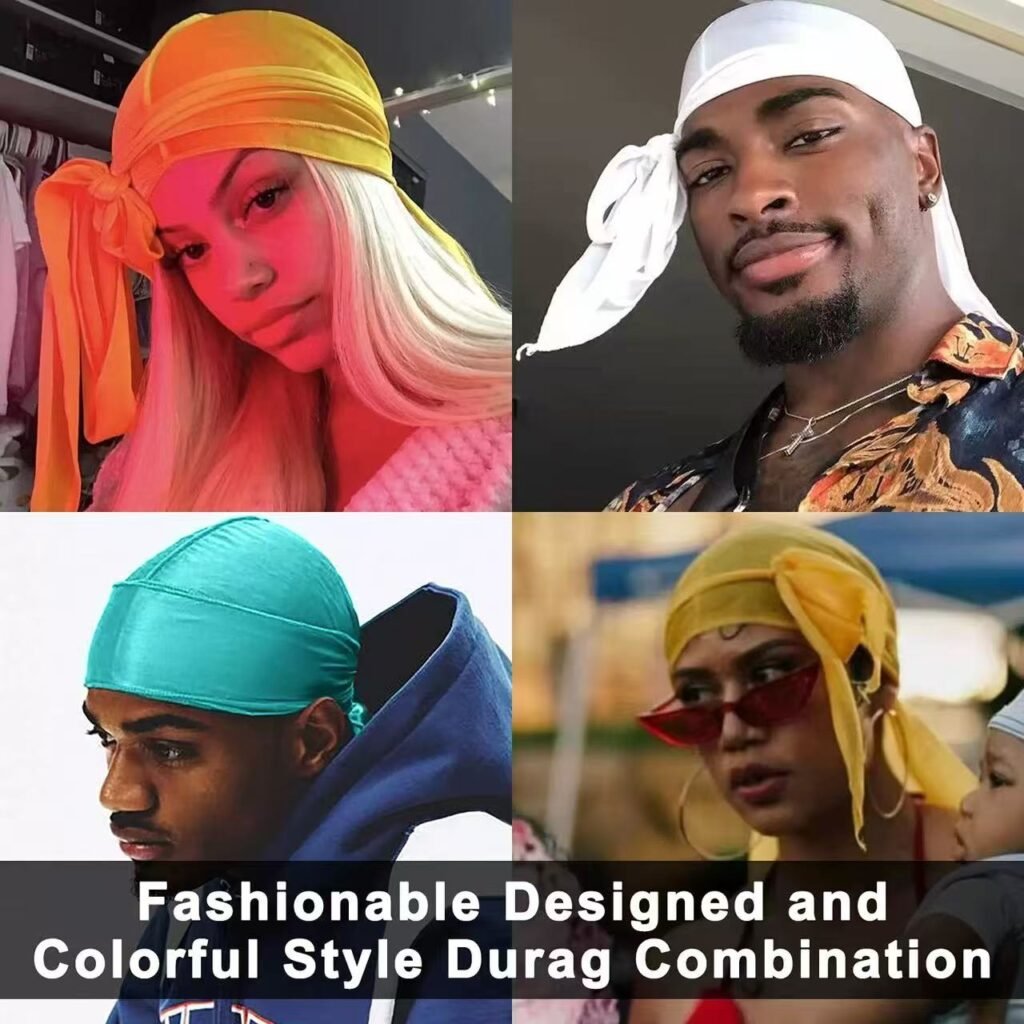
You’ve come to the right place. Most people see a durag and think “fashion.” But if you ask anyone who actually wears one—a real “waver”—they’ll tell you straight up: Дураг isn’t an accessory, it’s a tool.
We make textiles for a living, so we look at it like a piece of cultural technology. It’s a precisely engineered tool designed to solve a very specific set of problems. Its power as a cultural icon comes directly from the fact that it works.
So, here’s the real guide on what a durag is, why it matters, and (most importantly) which fabric you should actually buy.
So, What Is a Durag Actually For?
Forget fashion for a second. The #1 mission for a durag is to create and protect 360 waves.
If you don’t get “waves,” you don’t get durags. It’s that simple.
Waves are a hairstyle where you train your natural curls to “lay down” and form a ripple pattern all over your head. This takes weeks, even months, of intense, daily brushing. It’s a serious commitment.
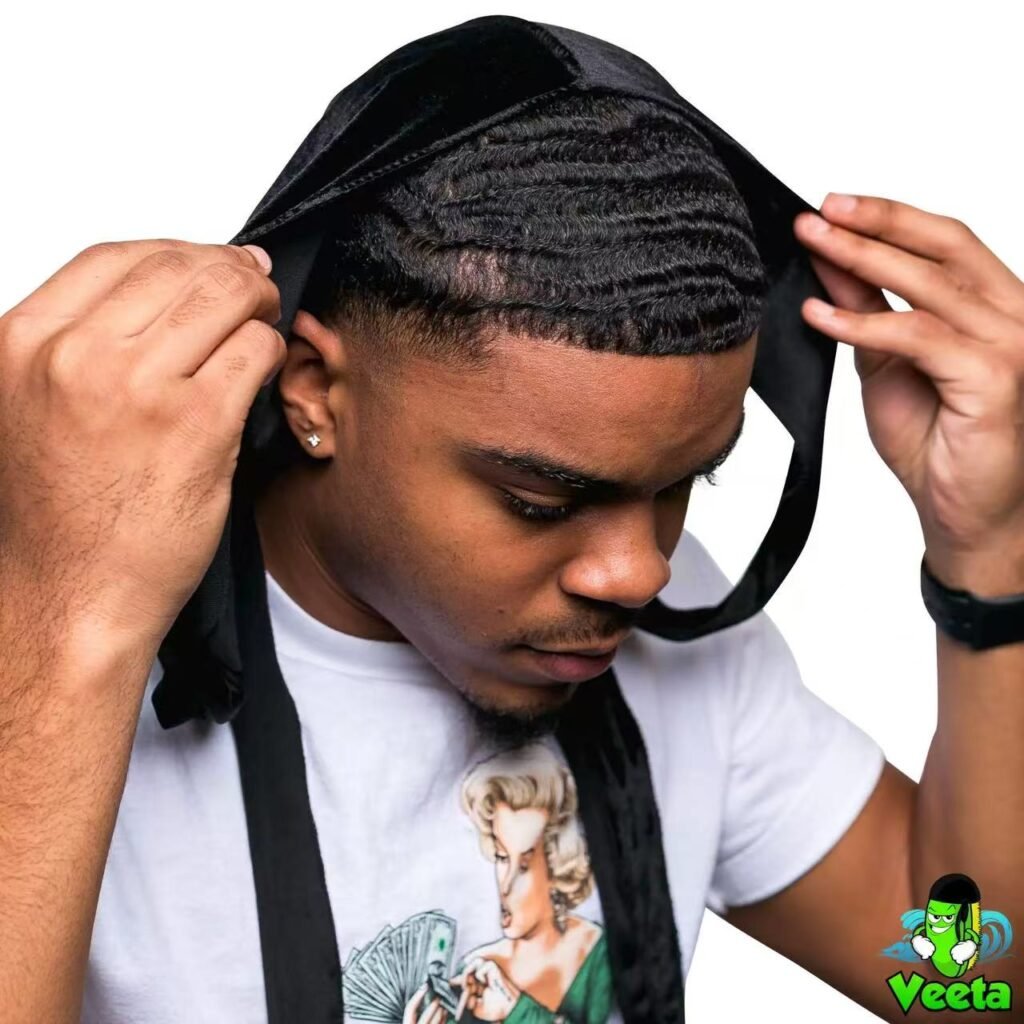
The durag is the only thing that makes all that work stick.
- It’s the “Mold” (Compression): After a 30-minute brush session, your hair is wild. The durag is what you put on immediately to apply pressure, forcing the hair to lay flat and “set” in that wave pattern.
- It’s the “Night Guard” (Moisture Lock): This is the part people mess up. Your cotton pillowcase is a wave killer. It’s rough, and it sucks all the natural oils and products (like grease or pomade) right out of your hair. A durag (especially a satin or silk one) protects your hair from friction and locks in the moisture while you sleep.
- It’s Protection (Braids & Locs): It also keeps cornrows, braids, and locs from getting frizzy at the roots while you sleep, making the style last way longer.
A Real-Talk Guide to Fabrics (This is the most important part)
As a manufacturer, this is our lane. The fabric is everything. Your choice of fabric is your durag. Here’s a breakdown of what’s actually popular in the US/EU market and what it really means.
1. Satin (“Silky”) – The King of the Market
- What it is: This is what 99% of durags are. Heads up: Satin isn’t a fiber, it’s a weave. That “silky” durag you’re buying is almost always Polyester Satin.
- The Vibe: This is the default, the workhorse. It’s the perfect balance of function and price.
- Who it’s for: Everybody. From the kid just starting his wave journey to the pro who needs a 10-pack.
- Pros:
- Smooth as hell: Gives you that low-friction surface you need.
- Durable: You can beat it up, throw it in the wash. It lasts.
- The Base for All Trends: This is the key. All those designer prints, holographic joints, camo, and custom logos? They’re all printed on a satin base.
- Cons:
- Doesn’t breathe: It’s polyester. It can get hot, and you’ll sweat under there in the summer.
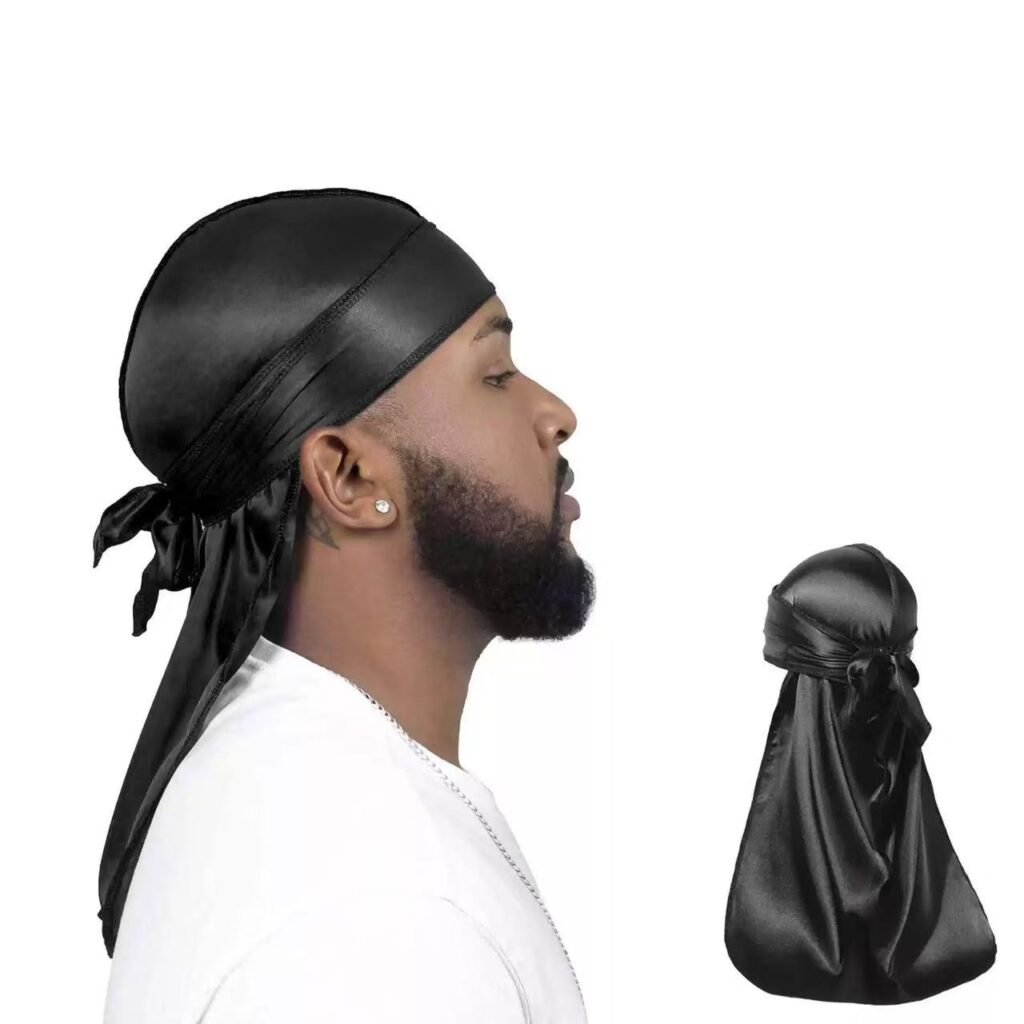
2. Velvet (Velour) – The “Look at Me” Statement
- What it is: That plush, fuzzy, high-fashion fabric.
- The Vibe: This is pure flex. It’s about Y2K fashion, 90s nostalgia. This is your “going out” durag.
- Who it’s for: The fashion-forward crowd, musicians, anyone trying to make a statement.
- Pros:
- Looks expensive: It’s got a heavy, rich look.
- The texture: It’s unique and just feels high-end.
- Cons (AND THIS IS A BIG ONE):
- The Function Trap: A velvet durag with no liner is a disaster for your hair. The velvet itself will suck your hair dry.
- The Pro-Tip: ALWAYS check the inside. A quality velvet durag MUST be lined with satin. If it’s not, it’s a costume, not a tool.

3. 100% Real Silk – The “Grail”
- What it is: We’re talking 100% Mulberry Silk, usually 19 momme or 22 momme.
- The Vibe: This is the high-end, “if you know, you know” option. This is the luxury pick for hair health.
- Who it’s for: Serious wavers, people with sensitive skin, and anyone who’s willing to pay for the best.
- Pros:
- Actual Hair Care: Silk is a protein. It doesn’t suck moisture from your hair; it helps you keep it.
- Stupid smooth: The least friction, period. Prevents breakage.
- Breathes: It’s a natural fiber. It’s cool in the summer, warm in the winter. Just plain comfortable.
- Cons:
- It’s expensive. Like, way more expensive.
- It’s delicate: You gotta hand-wash this, and it can tear easily. You don’t just throw this one on the floor.

4. The Trends: Finishes & Prints
These aren’t new fabrics, just new ways to dress up the ones above. This is what’s blowing up right now.
- Holographic / Iridescent: Looks like a rainbow or liquid metal. It’s a атлас base with a special finish.
- Designer Prints: All those “luxury” monogram, paisley, or camo prints. Again, almost always on атлас.
- Rhinestone / Sequin: All-over sparkle. Usually on a атлас or velvet base.
The takeaway: When you buy these trend-heavy durags, check the liner. If the inside is rough, it’s just a hat. It’s lost the “tool” part of the equation.
The Evolution: From a Tool to an Icon
Understanding the fabric helps you understand the history.
- 19th Century (Oppression): Its roots are in the head-wraps forced on enslaved Black women.
- 20th Century (Function): It evolved into a private, “in-the-house” tool for Black men to protect their hair after getting it chemically straightened (a “conk”). It was never, ever worn outside.
- 90s (The Statement): This is the turning point. Hip-hop artists like 50 Cent and NBA stars like Allen Iverson did something radical: they wore their durags in public. This was not a fashion statement. This was a cultural statement. It was saying, “I don’t care about your mainstream rules or what you think looks ‘respectable.’ This is part of my culture, my process, and I’m not hiding it.”
- 2000s (The Backlash): The establishment freaked out. The media linked it to “thug” culture. The NBA even created a dress code to ban it.
- Today (The Takeover): It won. When Rihanna wears a durag on the cover of Vogue or A$AP Ferg wears one to the Met Gala, it’s the final word. They took an item that was functional, then cultural, then vilified, and cemented its status as a high-fashion icon.
How to Tie It (The Right Way)
This is quick, but it matters for compression.
- Flip It: Turn the durag inside-out so the seam is on the outside. This stops the seam from leaving a line down the middle of your waves.
- Place It: Line it up with your hairline.
- Cross: Pull the ties to the back and cross them (don’t tie). Keep the straps flat.
- Forehead: Pull the straps to your forehead and cross them again.
- Tie: Pull them back and tie a knot under the “flap” (the cape part).
- Pro-Tip: Tying under the flap lets you pull the flap down at the end to add extra compression.
- Pull the Flap: Give the flap a gentle tug down to make the whole thing snug.
The Bottom Line: Respect the Tool
So, what is a durag?
It’s a high-performance hair care tool that is non-negotiable for getting 360 waves.
And because of that raw function, it’s become one of the most powerful and recognized cultural symbols we have.When you’re buying one, you’re not just picking a color. You’re picking a piece of technology. Are you going for the Сатин workhorse, the Velvet flex, or the Шелк pro-level-care? That’s the real choice.

Один ответ
Привет, я здесь впервые. Я наткнулся
эта доска и я нахожу ее действительно полезной и
Очень мне помогли. Надеюсь, что смогу что-то сделать взамен и помочь другим, как вы помогли мне.