Bandana con motivo PaisleySearch for a cotton paisley bandana online right now, and you’ll be hit with thousands of options. You can grab a cheap $2 one at a big-box store, or you can drop $145 (or even up to $225!) on a designer, Italian-made archival piece like those from Drake’s.
So, when is it actually worth paying a premium? Generally, cheap, mass-produced polyester blanks sit in the $1 to $10 range, while hand-printed, high-quality cotton pieces fall anywhere from $80 to $200+. They all feature that classic teardrop motif, so what exactly is the difference?
If you’ve ever bought a cheap bandana that felt stiff, scratchy, or made your neck sweat instantly, you already know the struggle. Whether you need it as a handkerchief, a face cover for a dusty hike, or a stylish neck accessory, here is your insider’s guide to choosing a real cotton bandana that actually looks and feels good.
The Golden Rule: Insist on 100% Cotton
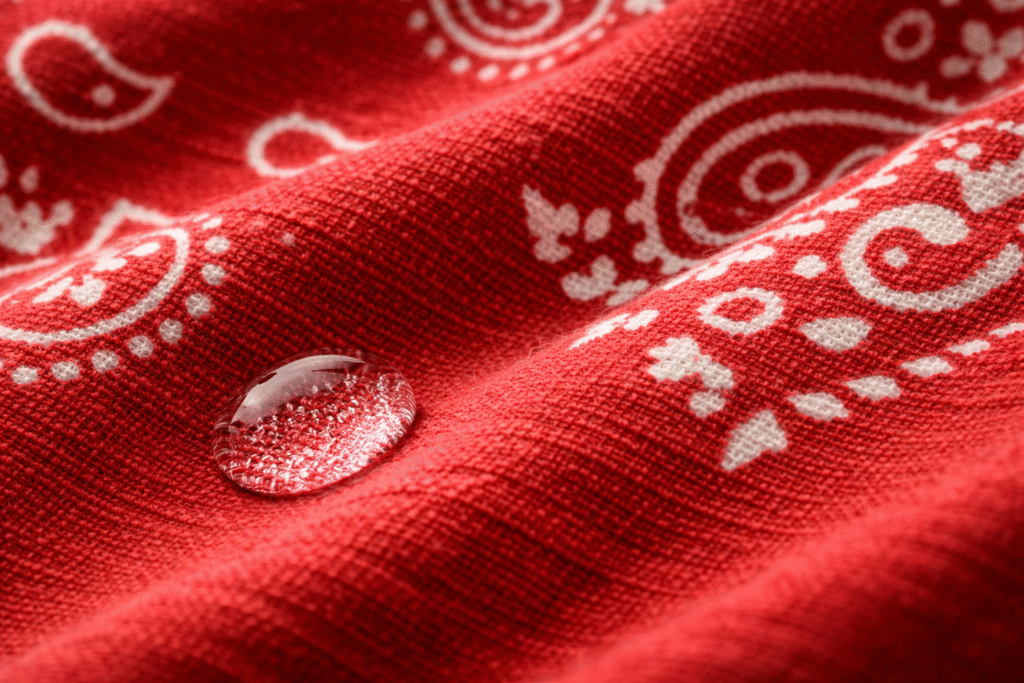
When hunting for the perfect Cotton paisley bandana pattern, the fabric is everything.
The market is flooded with cheap polyester or poly-blend knockoffs. They might look vibrant on your screen, but in real life, they feel like rough plastic. Even worse, synthetic fibers trap heat and harbor odors, making you sweaty and uncomfortable. Natural fibers, on the other hand, are breathable and skin-friendly.
A true 100% cotton paisley bandana naturally absorbs sweat, breathes easily, and—best of all—softens with every single wash. The more you wear and wash it, the more it feels like that perfectly broken-in vintage piece.
Size & Weight Matter, Too: Standard sizes usually run about 22″ x 22″ (55cm x 55cm), which is the sweet spot for tying around your neck or head. However, you’ll also see “oversized” 65cm x 65cm options, which are highly popular with vintage and luxury brands.
You should also pay attention to the fabric weight (GSM, or grams per square meter) to match your needs:
- Lightweight (60–100 GSM): Feels like a handkerchief or a light summer headwrap. Easy to tie and great for styling or using as a breathable face cover.
- Medium-Weight (100–140 GSM): The ultimate everyday go-to. Durable but not overly heavy.
- Heavyweight (140–180+ GSM): Rugged and tough. Best for heavy outdoor work, repeating wiping, or crafting projects.
The “Double-Sided” Test
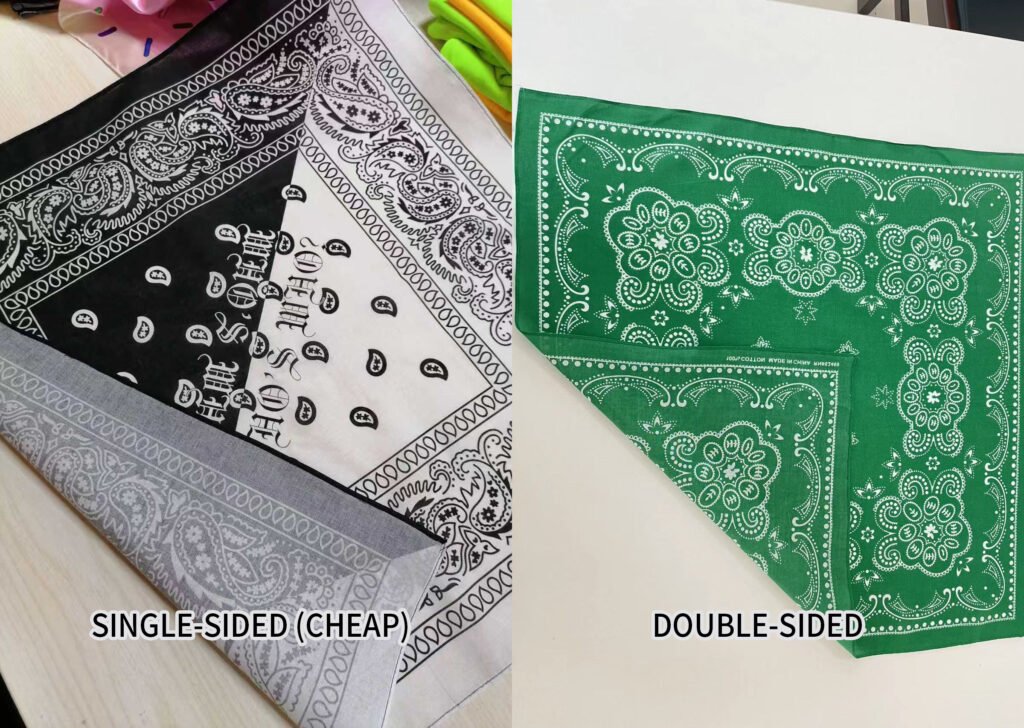
Here is the biggest giveaway of a cheap bandana: the back is completely blank and white.
When you fold a bandana to tie it, the reverse side almost always shows. High-quality manufacturers use “duplex” printing or full-saturation dyeing techniques with water-based inks. This means the dye deeply penetrates the cotton fibers, ensuring a vibrant, uniform look on both sides.
When shopping, always look for keywords like “prints on both sides”, “double-sided”, or “duplex”. If you are checking one out in person, you can even wet a small corner to see if the ink bleeds through naturally—a true sign of quality.
Colors That Never Go Out of Style

While you can find bandanas in neon green or hot pink, the classics will always reign supreme. The fashion world constantly cycles back to the bandana print, using it in everything from streetwear to high-end runway collections.
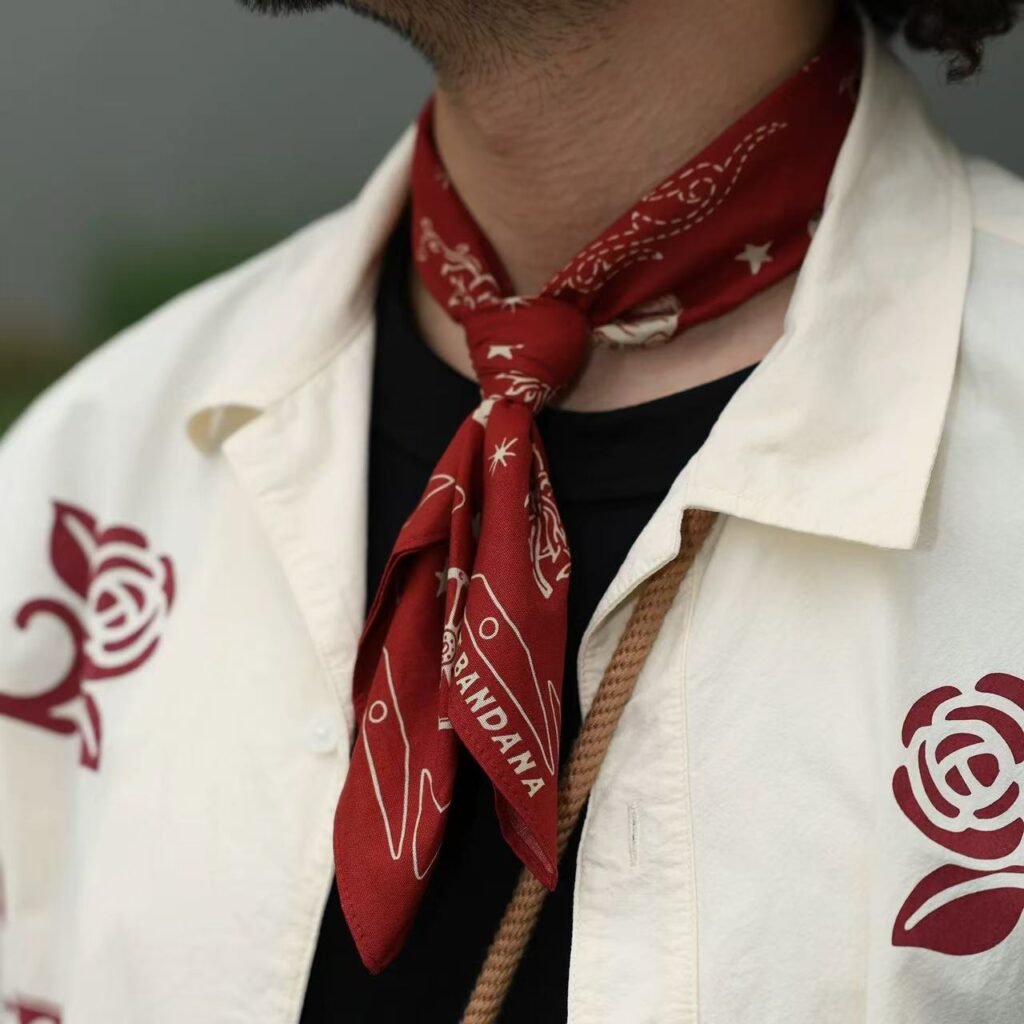
- The Red cotton Paisley Bandana: This is the undisputed king. Rooted in traditional Americana and cowboy culture, a classic red bandana paired with a white tee and denim jacket is an undefeated casual look.
- The Brown cotone Paisley Bandana: If red is too loud for you, earthy tones are having a massive moment right now. A brown or olive green bandana fits perfectly with the modern outdoor, workwear, or “Gorpcore” aesthetic. Plus, it hides dirt well and adds a rugged touch to your outfit.
What is the Paisley Bandana Meaning?
Many people ask about the paisley bandana meaning and whether it holds a specific cultural significance.
Historically, the curved teardrop paisley shape originated in ancient Persia and India, representing the “tree of life” or a floral spray. It blew up in the West during the 19th century when the Scottish town of Paisley began mass-producing the pattern.
Later on, it became a practical lifesaver for American cowboys (used to wipe off sweat and filter out dust), and eventually, a symbol of rock ‘n’ roll rebellion. Today, it has transcended its subculture roots to become a universal fashion staple. It doesn’t belong to any one group—it simply belongs to classic style.
Beyond the Neck: The Upcycling Trend
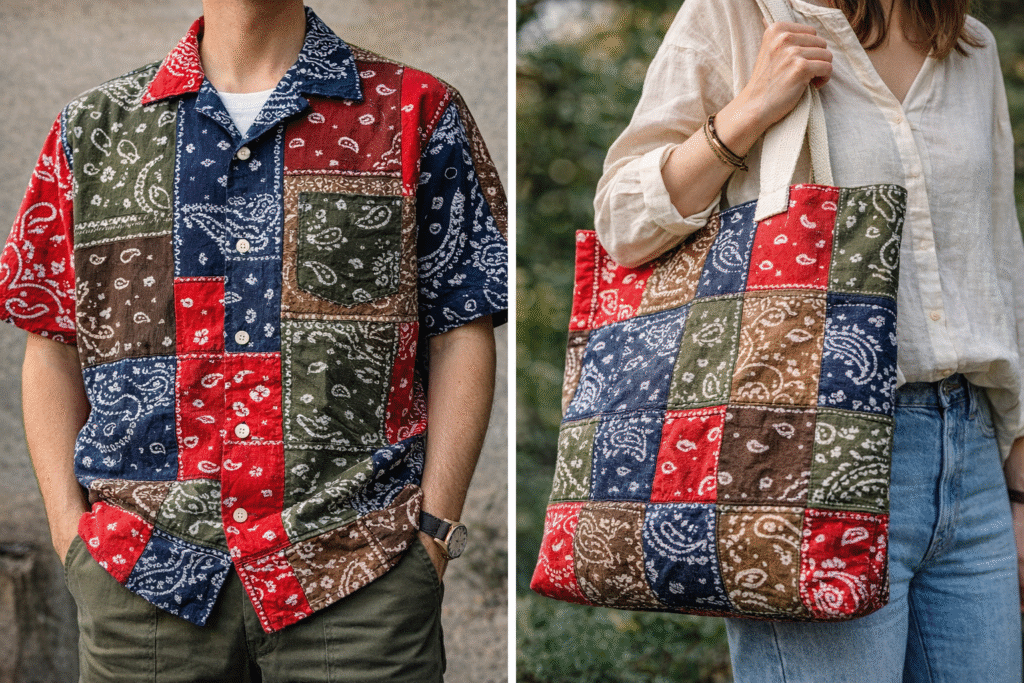
The versatility of a simple cotton square is unmatched. Beyond just wearing it on your head or neck, the fashion world has taken this pattern to the next level.
Have you noticed the huge rise of the paisley bandana shirt? Designers and DIY enthusiasts are taking multiple vintage-style cotton bandanas and sewing them together to create unique patchwork button-downs and tote bags. It’s a massive trend in sustainable fashion.
Pro Tip for Crafters: If you plan to sew multiple bandanas together, make sure you buy pieces with a similar GSM (thickness). Also, wash them separately in cold water before sewing to pre-shrink them and prevent the colors from bleeding onto each other!
The Bottom Line
A well-made 100% cotton paisley bandana is the cheapest and easiest way to upgrade an outfit in 10 seconds. Don’t settle for stiff, single-sided polyester. Check the label for cotton, make sure the print bleeds through to the back, and stick to classic colors.
Looking for the perfect classic bandana? Explore our premium collection of double-sided bandanas. From classic red A earthy brown, we’ve got the perfect 22×22 bandana for your next adventure.
Quick Care Guide: How to Wash a Cotton Bandana
Want to make your bandana last longer and feel incredibly soft? Here is the secret:
- Keep it Cool: Wash on a cold or gentle cycle using a mild detergent.
- Skip the Heat: Avoid high-heat drying, which can cause unwanted shrinking and weaken the fibers.
- Air Dry: Hang or lay flat to dry. This extends the life of the fabric and actually helps speed up the “break-in” process so it gets perfectly soft.