

Bandanas are more than just a square piece of fabric; they are a canvas of cultural history. While many people immediately associate specific colors with the Bloods and Crips, the history of the paisley bandana goes back much further—from the cowboys of the American West to the workers of the Industrial Revolution.
Today, understanding bandana color meanings is essential not just for history buffs, but for anyone who wants to wear this accessory with confidence and style. In this guide, we explore how bandana culture has evolved from street signals to a staple of global fashion and corporate branding.
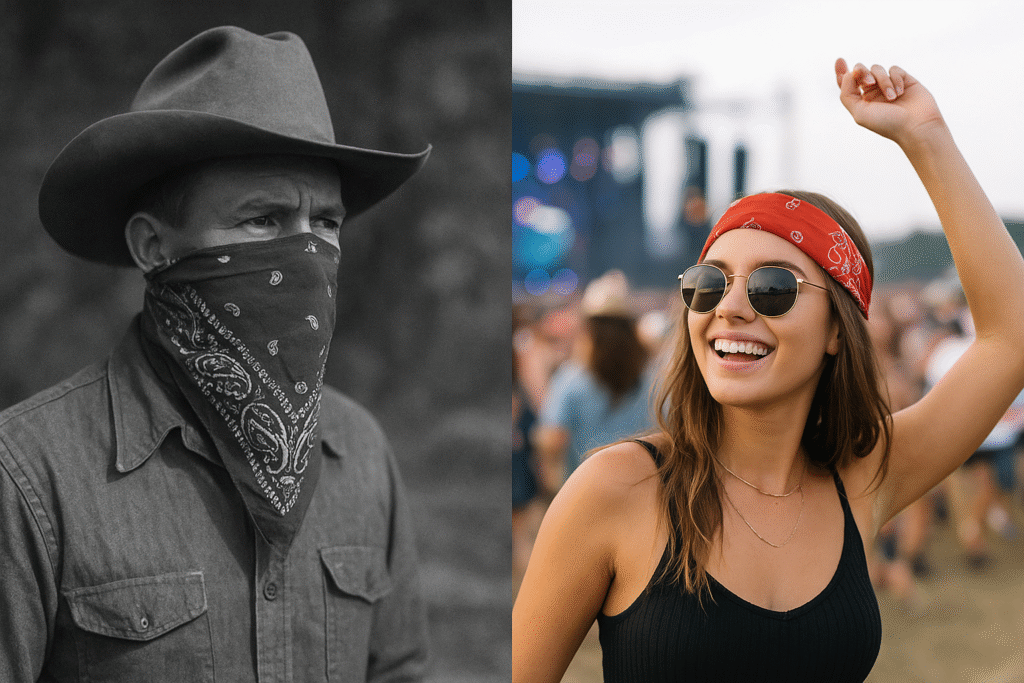
The Origins: Bloods, Crips, and The “Flagging” Culture
In the cultural landscape of 1970s Los Angeles, the bandana became a powerful tool for identification, a practice known as “flagging.”
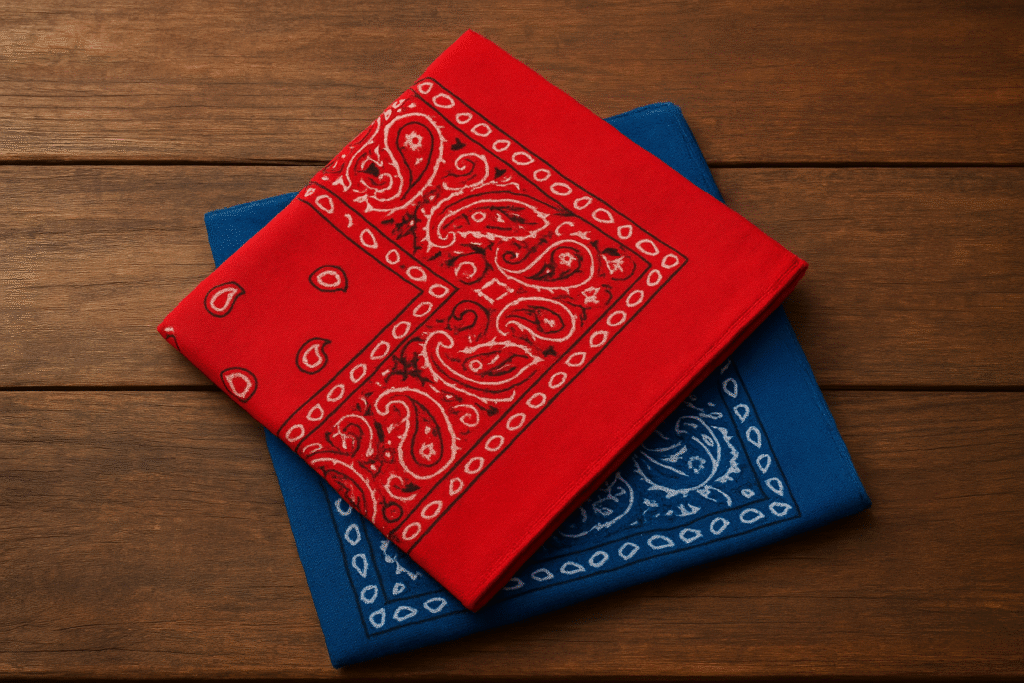
Blue Bandana Meaning: Historically linked to the Crips, a group formed in Los Angeles high schools. The choice of blue is still debated—some point to school colors, while others reference the widespread availability of blue denim and workwear.
Red Bandana Meaning: Adopted by the rival Bloods as a bold, highly visible color that sharply contrasted with blue.
During this era, a colored pañuelo was not a fashion statement—it was a strictly enforced sign of allegiance. However, as West Coast Hip Hop exploded in the 1990s, icons like Tupac and Snoop Dogg brought these symbols into mainstream media, blurring the lines between gang affiliation and street style.
Beyond the Streets: Workwear and The Hanky Code
Before red and blue bandanas were associated with street gangs, they had entirely different meanings, showing how context shapes symbolism.
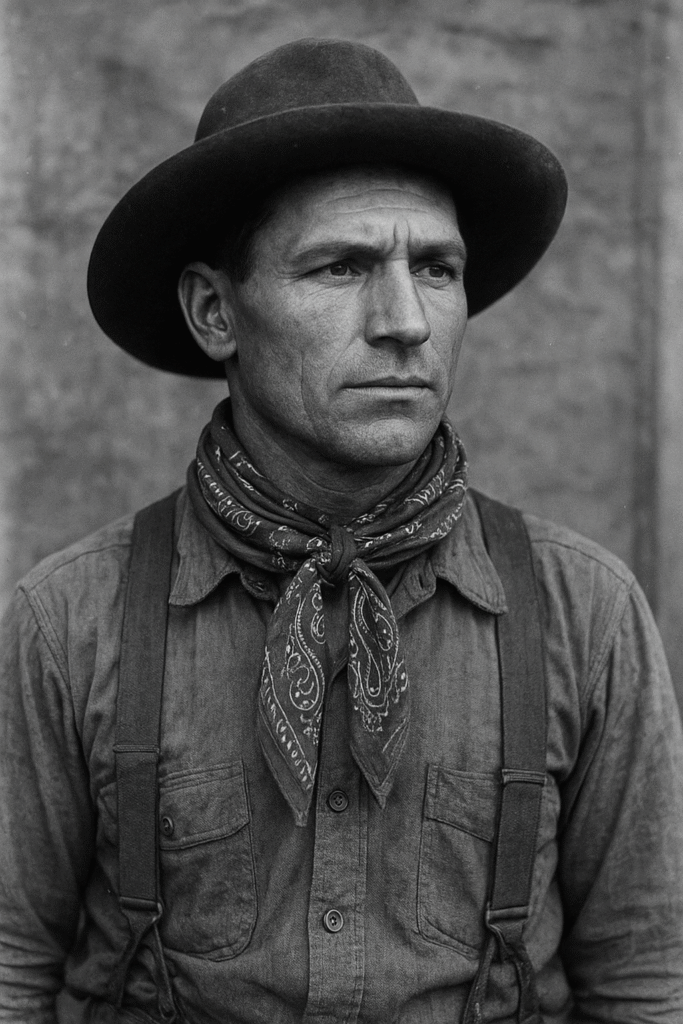
The Working Class: In the early 20th century, red bandanas were common gear for coal miners, railroad workers, and farmers. They were practical tools—meant to hide dirt, sweat, and blood—not symbols of violence.
The Hanky Code: In the 1970s and 80s, the LGBTQ+ community used a detailed bandana color code system. Wearing a specific color in the left or right back pocket signaled preferences and identity within the community, demonstrating the bandana’s adaptability as a subtle communication tool.
Modern Context: Is It Safe to Wear Bandanas Today?
One of the most searched questions online is: “Is it safe to wear a red or blue bandana today?”
In Fashion & Sports:
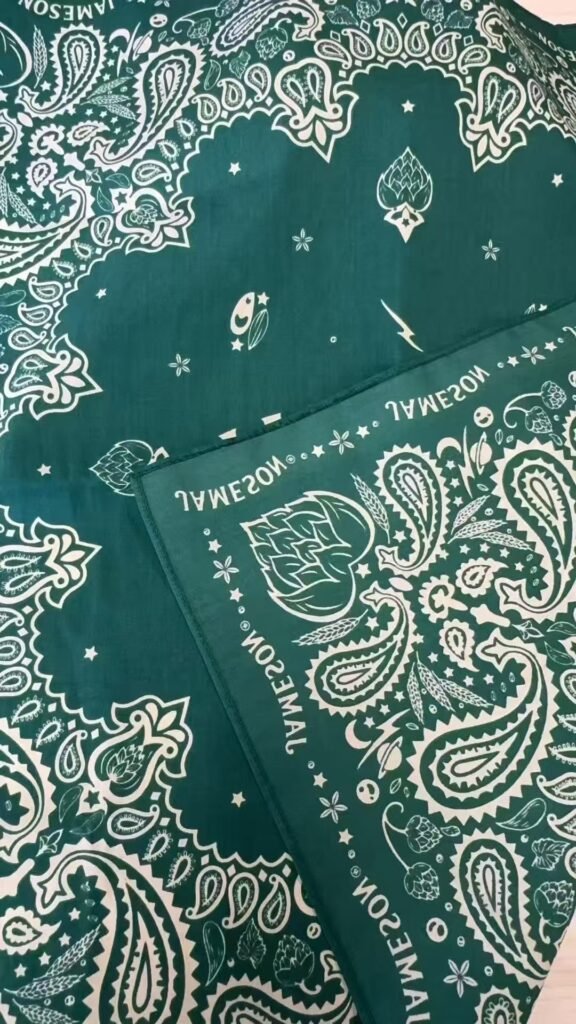
Wearing a custom printed bandana with your team logo, company brand, or artistic design at festivals, gyms, or corporate events is completely safe and widely accepted. Modern fashion focuses far more on style and expression than historical codes.
In Specific Neighborhoods:
In a small number of areas with active gang activity, wearing a solid red or blue bandana prominently may still send the wrong signal.
For this reason, many people today prefer neutral colors (black, white, grey) or pañuelos personalizados featuring unique patterns and logos, which help remove any unintended historical associations and bring the accessory back into everyday life.

Quick Reference: General Bandana Color Meanings (Modern, Non-Gang Context)
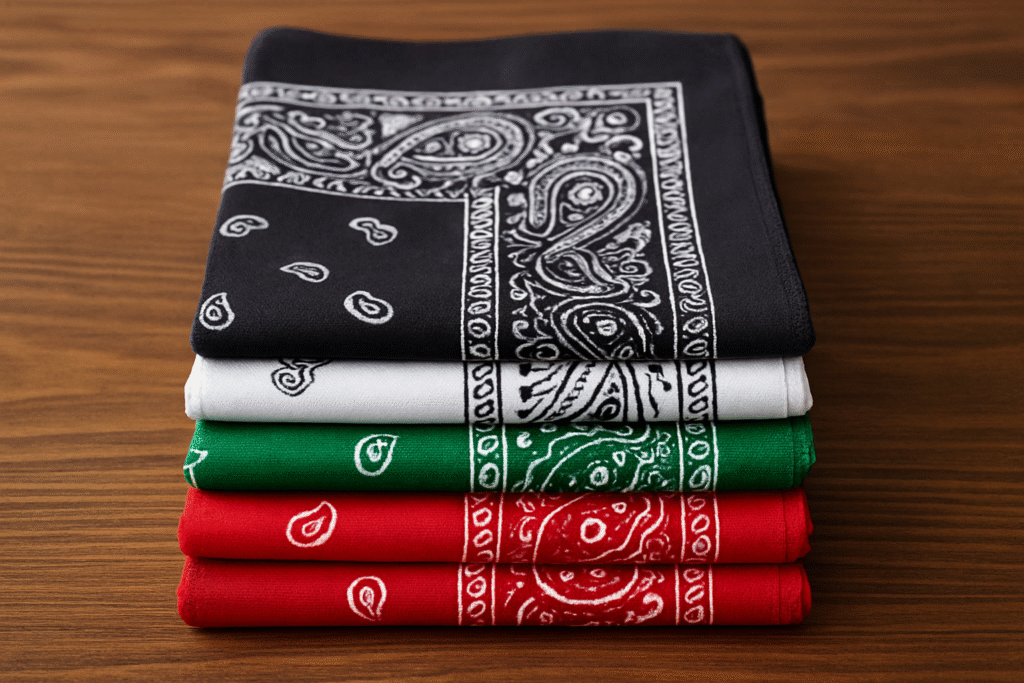
Black Bandana: Associated with biker culture, rock and roll, and sleek, neutral fashion.
White Bandana: Represents peace and neutrality; widely used for weddings, events, and high-contrast logo printing.
Green Bandana: Occasionally linked to eco-movements or local groups, but generally considered neutral.
Rainbow Bandana: Universally recognized as a symbol of LGBTQ+ pride and inclusivity.
Conclusion: From Street Codes to a Canvas for Creativity
The journey of the bandana—from the necks of cowboys to the street codes of the Bloods and Crips, and finally to global runways—is a testament to its enduring power. While understanding bandana color meanings provides valuable historical context, it does not dictate how we wear them today.
In the modern era, the narrative has shifted. The bandana is no longer about territory; it is about identity and expression. Whether you are a brand seeking promotional merchandise or a team looking for unity, the safest and most impactful way to wear this accessory is to make it your own. By choosing custom bandanas with logos and unique designs, you move beyond historical stigmas and turn a simple piece of fabric into a powerful statement of brand culture and community spirit.

Un comentario
Este blog fue... ¿cómo decirlo? ¡Relevante! Por fin encontré algo que me ayudó.
¡Salud!