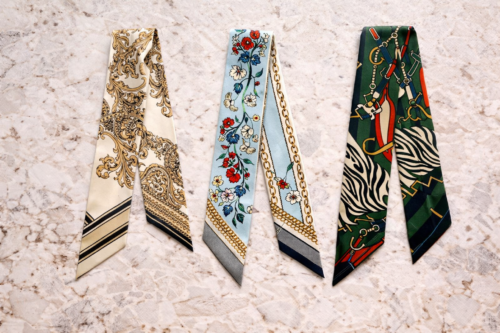
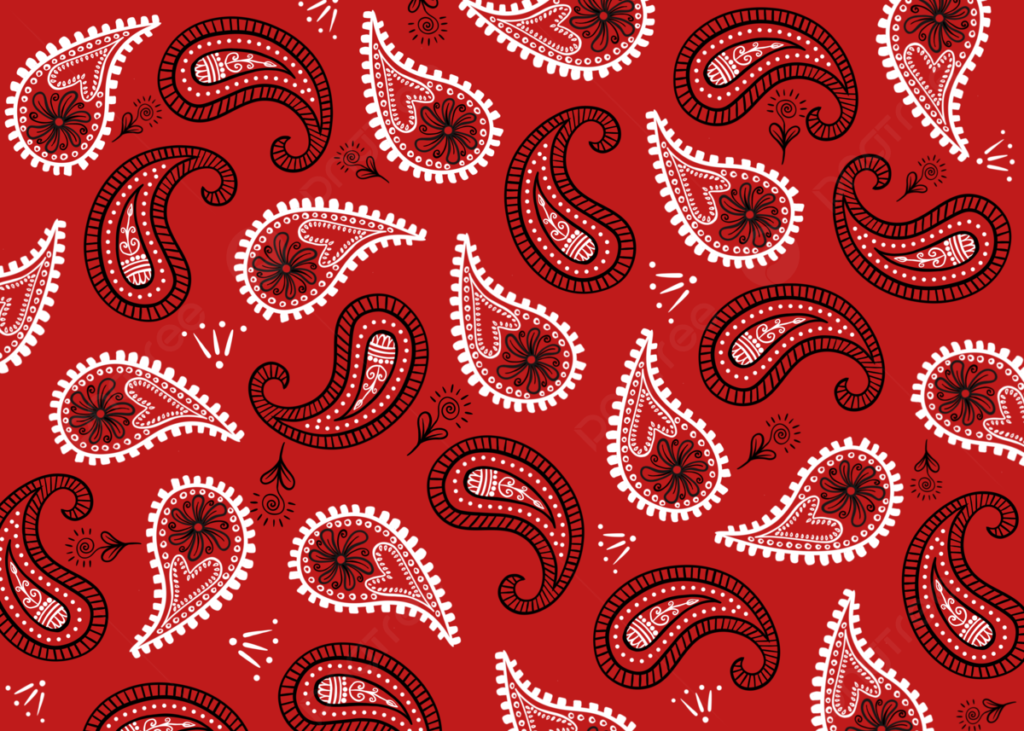
Bandanas are one of those timeless accessories that never go out of style. You can tie them around your neck, wear them as a headband, or wrap them around your wrist. But have you ever wondered — what’s that classic teardrop-shaped Bandana-Muster actually called?
That famous design is known as the Paisley-Muster — but its story goes far deeper than a simple fashion choice. The Bandana-Muster we all recognize today has roots in ancient Persia, evolved through India, and was later named after a small town in Scotland. It’s a true global symbol of art, identity, and culture.
1. What Is the Bandana Pattern Called?
In short: it’s called Paisley.
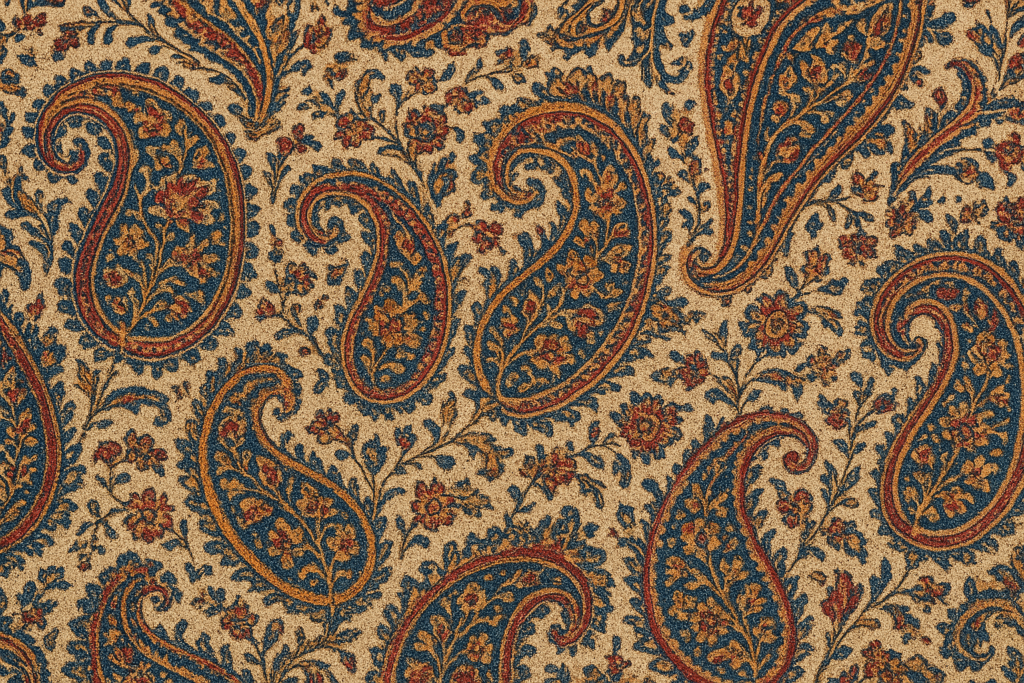
But from a historical point of view, the Bandana-Muster we now know as Paisley originally came from Persia, where it was called “Boteh” (بته) — meaning “shrub” or “bud.” The Boteh pattern symbolized life, eternity, and prosperity.
→ Source: Wikipedia – Paisley Design
The name “Paisley” came later, from the Scottish town of the same name, which became famous in the 19th century for mass-producing these patterns on fabrics.
→ Source: Adamley Silk
So, when you see that swirling teardrop-shaped Bandana-Muster, you’re really looking at the Western evolution of the Persian “Boteh.”
2. The Full History of the Bandana Pattern (Paisley or Boteh)
Der history of the bandana pattern is a journey that spans thousands of years and multiple cultures.
A. Ancient Origins — The Persian “Boteh”
It all started in the Sassanid Empire (224–651 AD) in ancient Persia. The “Boteh” motif appeared on royal robes, carpets, and ceremonial textiles. It was seen as a symbol of protection and spirituality.
→ Source: Wikipedia
B. To India and Kashmir
Through ancient trade routes, the design traveled east to India, especially the Kashmir region. Skilled artisans began weaving the pattern into luxurious Kashmir shawls, which became symbols of wealth and prestige in Europe.
→ Source: Paisley Power
C. Europe’s Reinvention — The Name “Paisley”
By the 18th and 19th centuries, European factories wanted to recreate the costly Kashmir shawls. The Scottish town of Paisley became the leader in producing these machine-made versions — and that’s how the Paisley bandana pattern got its modern name.
Americans even gave it fun nicknames like “Persian Pickles,” while the French called it “Tadpoles.”
→ Source: Adamley Silk
3. How the Paisley Bandana Became a Cultural Icon
Der Bandana-Muster became iconic when it met the practicality of the American West.
- In the 1800s, cowboys, miners, and railroad workers wore bandanas as dust masks or sweat cloths. The Paisley print was chosen because it was both decorative and great at hiding dirt.
- In the 20th century, the bandana turned into a symbol of rebellion and self-expression — adopted by bikers, rock stars, and activists.
- In modern fashion, Die Paisley bandana pattern shows up everywhere — from streetwear to luxury fashion houses like Gucci and Etro.
→ Source: Luxiders Magazine
4. Why the Bandana Pattern Is Still So Popular
Der Bandana-Muster endures because it’s both beautiful and versatile. You can wear or use it in so many creative ways:
- Headwear: as a headband, turban, or wrap to protect from sun and sweat.
- Neckwear: as a neckerchief, scarf, or style accent.
- Face mask: handy for dust or wind protection.
- Wristband: adds flair and function during workouts.
- Emergency tool: can work as a sling or bandage.
- Pet accessory: stylish for your furry friend.
- DIY use: great for gift wrap, crafts, or even pillow covers.
Each time you wear a bandana with a Paisley pattern, you’re wearing more than fabric — you’re carrying a story that connects history, craftsmanship, and style.
5. Common Questions About Bandana Patterns
Q: What is the original bandana pattern called?
A: It’s called the Paisley-Muster, derived from the Persian Boteh design.
Q: What’s the difference between Boteh and Paisley?
A: Boteh is the ancient Persian version — shaped like a curved teardrop or bud. Paisley is the Scottish interpretation that became famous in Western fashion.
Q: How can you recognize a true Paisley bandana pattern?
A: Look for a curved teardrop shape filled with tiny floral or vine motifs. Authentic designs usually have intricate “inner details,” not just plain shapes.
→ Source: Adamley Silk
Q: Are all bandanas Paisley patterned?
A: Not necessarily. While Paisley is the most iconic Bandana-Muster, you can also find plain, camo, skull, flag, or modern graphic designs.
6. Final Thoughts
From ancient Persia’s sacred Boteh to Scotland’s textile revolution, the Bandana-Muster we now call Paisley tells a story that spans continents and centuries.
It transformed a simple square of cloth into a global fashion icon — representing style, history, and self-expression.
So the next time you tie on a Bandana, remember: you’re not just wearing a pattern. You’re wearing a piece of living history — one that continues to evolve with every generation.