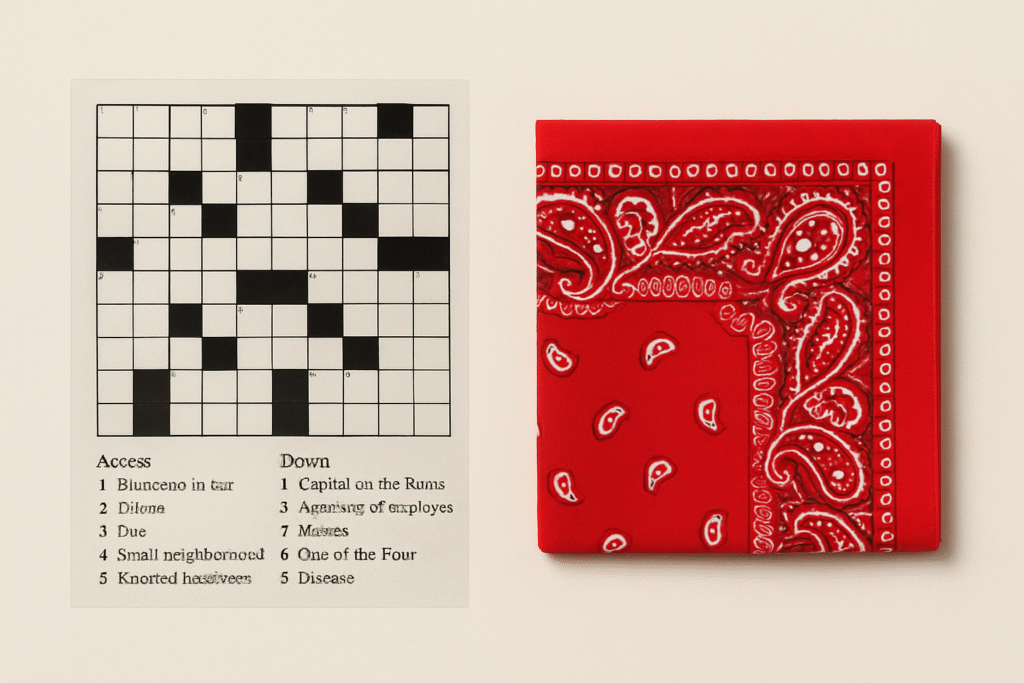
In our daily lives, we bump into items all the time that seem simple but actually have this deep backstory. Take the die-hard New York Times crossword fans, for example. You might get stumped by that tricky paisley patterned kerchief crossword clue. When you finally scribble in that seven-letter answer—باندانا—you probably just think, “Okay, puzzle solved.”
But for those of us deep in the textile world and for fashion buyers, when we talk about what is a paisley patterned kerchief called, we aren’t just talking about a vocabulary word. We’re talking about a cultural journey that spans thousands of years. As a brand that has been manufacturing headwear for a long time, today we’re going to break down the many layers of the paisley patterned kerchief, from its ancient roots to modern custom production, so you can see this timeless square of fabric in a whole new light.
1. The Name Game: What Do We Actually Call It?
When consumers type paisley patterned kerchief name into a search bar or ask about the handkerchief pattern name, that confusion actually tells a story about how many identities this item has held across different eras and cultures.
Back in the 18th and 19th centuries, it was usually just called a “Kerchief” (from the French couvre-chef, meaning “cover head”). As time went on, this fabric featuring the paisley floral pattern was made into larger squares to be worn around the neck or head, and it gradually evolved into what we are more familiar with today: the باندانا (from the Hindi word badhnati, meaning to tie-dye).
So, the next time someone asks you what is a paisley patterned kerchief called, the most accurate and common modern answer is definitely باندانا. However, in the world of dapper menswear, you might still see it popping up as a Pocket Square or simply a منديل.
2. The Curve of Life: Origins and Symbolism
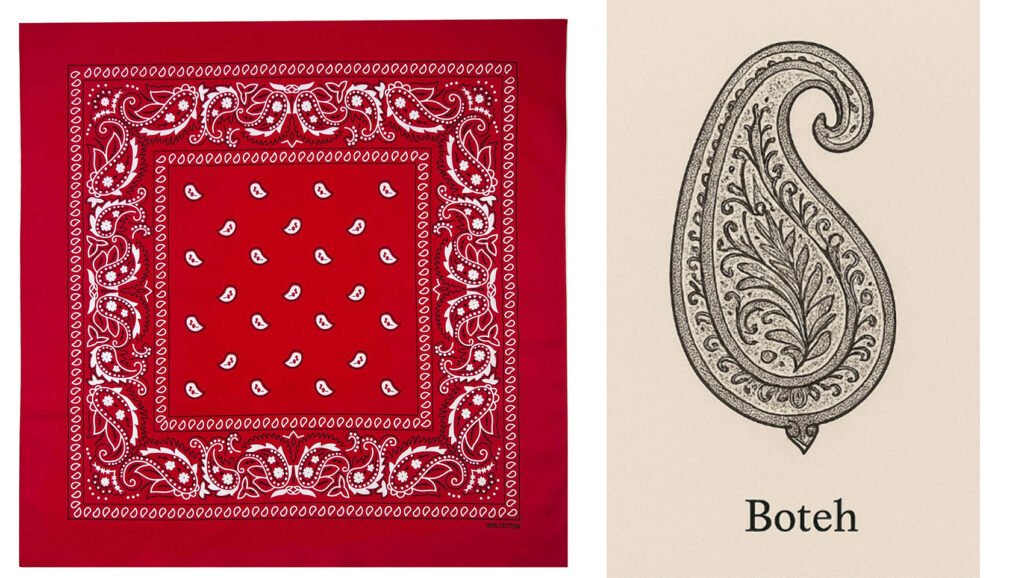
To really get the vibe of this unique design, we have to look back at the paisley bandana origin. Spoiler alert: despite the name, it didn’t start in the Scottish town of Paisley—that’s just where they became famous for weaving them later on. The pattern actually originated in ancient Persia, where locals called it “Boteh” or “Buta.”
A lot of people ask: What does the paisley pattern symbolize?
In ancient symbolic systems, it was seen as the shape of a bent Cypress tree, representing vitality, resilience, and eternity. It has also been interpreted as a tear, a fruit, or a fusion of energies. So, the answer to what does the paisley bandana pattern mean isn’t just one thing—it’s a cultural symbol that blends natural power, good luck, and the cycle of life.
3. A Visual Feast: Aesthetics and Craftsmanship
From a manufacturing and design perspective, what does a paisley pattern look like?
It’s not just a curvy droplet. It is a complete visual structure. A classic paisley floral pattern consists of a large, teardrop-shaped main motif, filled with layers of intricate details—tiny flowers, scrolling lines, or symmetrical geometric shapes—creating a rich variety of types of paisley patterns.
In our modern design process at the factory, we don’t rely on old-school woodblocks anymore. We use precise paisley bandana pattern vector files to render the designs. This ensures the pattern stays crisp and sharp, no matter the size. For our B2B clients, this is huge, because only a vector file allows a company to do a bandana custom with logo where their brand identity blends perfectly into that complex paisley background without looking messy.
And then there’s color. Color doesn’t just change the look; it shifts the paisley bandana meaning:
- The classic Red symbolizes passion and that rugged American West spirit.
- Paisley bandana green is often used for eco-friendly themes or peace movements.
- Black and white tones emphasize a streetwear vibe and minimalist power.

4. The Tale of Two Fabrics: Practical Cotton vs. Luxurious Silk
When choosing materials, one of the most important paisley pattern facts to understand is that the fabric doesn’t just change how it feels—it defines the style.
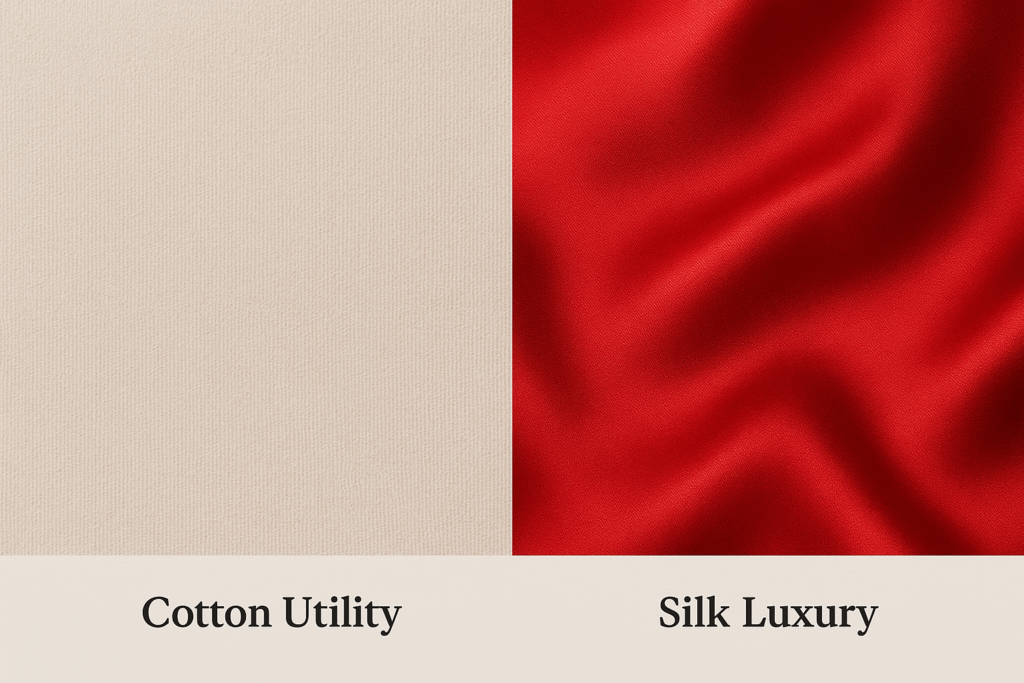
The Utility of Cotton Most of the paisley print bandana styles you know and love are made from 100% cotton. We often use a discharge printing method that lets the dye penetrate deep into the fibers, making the design visible on both sides. Cotton is tough, absorbent, and durable—a total workhorse for daily wear, outdoor activities, or work uniforms.
The Luxury of Silk When we talk about paisley bandana silk, we are entering high-end accessory territory. Real silk has a natural sheen and a smooth touch. The Paisley pattern on silk often looks more detailed and saturated, making it the perfect highlight for a suit, evening gown, or formal look.
5. Styling and Myth-Busting: Breaking Stereotypes

While specific bandana colors had ties to gang culture decades ago, that is largely a thing of the past. Today in the fashion world, the paisley pattern bandana is a shortcut to adding depth to your outfit.
A lot of people wonder: what pattern goes with paisley?
Since Paisley is already visually busy, we usually suggest keeping it simple. Don’t fight the pattern. A solid color is your best friend here. A simple white T-shirt paired with a paisley patterned kerchief is enough to instantly upgrade your look.
For the bolder dressers out there, paisley pattern pants or a bohemian paisley handkerchief dress are staples for music festivals and vacation vibes. Just keep the rest of your accessories minimal and let the pattern be the star.
Final Thoughts
From the robes of ancient Persian royalty to the looms of Scotland, and from the necks of American cowboys to the pockets of modern city dwellers, the Paisley patterned kerchief has used its signature curved pattern to bridge cultures and eras, leaving an irreplaceable mark on global fashion.
Whether you landed here trying to solve a paisley patterned kerchief crossword clue or you’re hunting for a top-tier bandana custom design supplier, this square of fabric proves one thing: true classics never get lost in the trends.